
Teaching
Our Philosophy
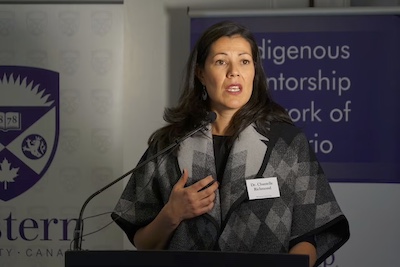
As an Anishinaabe scholar, Dr. Richmond holds responsibilities not only to graduate and undergraduate trainees, but also to Indigenous communities and Nations. In fact, the principle that research must result in reciprocal and mutual benefit for the researched and the researcher is the cornerstone of Dr. Richmond’s training philosophy and applied practice. We are not doing enough to ensure that ethical principles are mandated as part of the research process, as Smith (1999) makes evident in her seminal work on decolonizing methodologies. The processes and outcomes of our research must result in mutual benefit for both study communities and university partners. This is an area of teaching on which Dr. Richmond focuses significant attention, both in the classroom and in the community.
Courses offered by Dr. Richmond:
GEOGRAPHY 9116: Indigenous Health
Course Description: In this interdisciplinary, seminar-based course, we will critically examine key determinants of Indigenous health as we engage with various concepts, theories, methods and ethical issues. Based on a review of the pertinent national and international literatures, we will explore differences between the health and social status of Indigenous and non-Indigenous peoples, and identify processes leading to these gaps.
GEOGRAPHY 2411G/ FIRST NATIONS STUDIES 2601G: Indigenous Environments
Course Description: In this course, we will examine the special relationship between Indigenous peoples and their physical environments. We will explore the causes and consequences of environmental change as they are experienced by Indigenous communities from around the globe including those related to: identity, food, health, water quality, local economies, social functioning and urbanization. Overarching themes such as colonialism and environmental dispossession will guide the course, with emphasis on their consequences for community well-being.
Previously Offered:
GEOGRAPHY 9108: Qualitative Methods
Course Description: This course provides students with an overview of several of the main types of qualitative research methods, as well as the epistemological issues that distinguish qualitative from quantitative methods. It also considers ethical issues, data analysis and management challenges that are associated with qualitative research.
GEOGRAPHY 4900/4901: Thesis
Course Description: An independent (but supervised) research project done over two terms and culminating in a written thesis. It includes a review of relevant background literature, compilation / collection of primary or secondary data or information, analysis and interpretation of results i.e. more than an extended essay or literature review. Presentations are made to the Department prior to final submission of the thesis.


